The restless spirit of Buonaparte did not allow him any repose, even after his subjugation of the greater part of the north of Europe. Whilst he had been contending with the Russians, he had been planning fresh campaigns¡ªfresh conquests at the opposite extremity of the Continent. Godoy, the favourite of the King of Spain, and the paramour of his dissolute queen, who had professed great admiration of Buonaparte, seeing him so deeply engaged in Germany, had suddenly called out a considerable army, and addressed it in a vaunting but mysterious way. The news of this reached Buonaparte on the field of Jena, and, discovering by this means the real sentiments of the Spanish favourite towards him, he vowed vengeance on Spain. It was by no means the first time that he had contemplated the conquest of Spain and Portugal, but this circumstance inspired him with a new impulse in that direction, and a plausible excuse. In his interviews with Alexander of Russia, these views had been avowed; and now, no sooner had he returned to Paris than he commenced his operations for that purpose. He blended this scheme, at the same time, with his great one of shutting out the British trade from the whole Continent. Russia had, by the Treaty of Tilsit, entered into a compact to enforce his system in her ports. Holland was compelled to submit to it. The kingdom of Westphalia was now in the hands of his brother Jerome, who had been forced to separate from his American wife, Elizabeth Paterson, and had been married to a daughter of the King of Würtemberg, so that the territories now comprised in the new kingdom of Westphalia were under the same law of exclusion. He had extended it to the Prussian ports since his conquest of that country, and to the Hanseatic towns. Denmark was ready to comply, and the treaty with Russia extended his embargo ostensibly to the whole western shores of the Baltic. Sweden refused to accept it, and the foolhardy King Christian IV. declared war on Russia, and invaded Norway. He promptly lost Finland and Pomerania. Sir[547] John Moore, with an army of 10,000 men, was sent to his assistance, but found him so unreasonable that he thought it better to return without landing the troops. Christian was soon afterwards deposed, and his uncle established in his place, who accepted the Continental system. But Alexander was as little faithful in this part of the Treaty as in other parts. In fact, he dared not strictly enforce the exclusion of British trade, were he so disposed. Nearly the whole heavy produce of Russia¡ªhemp, iron, timber, wax, pitch, and naval stores, which constituted the chief revenues of the Russian nobles¡ªwas taken by the British, and paid for in their manufactures. To have cut off his trade would have made the life of Alexander as little secure as that of his father, Paul, had been. The Russian and British trade therefore continued, under certain devices, and notwithstanding the decrees of the Czar to the contrary. Buonaparte knew it, but was not prepared to open up a new war with Russia on that account¡ªat least, at present. He was now turning his attention to the south.
In 1817 the number of power-looms in Lancashire was estimated at 2,000, of which only about 1,000 were then in employment, and the wages had fallen below the rate at which goods could be produced by machinery. To the power-loom, therefore, the hand-loom weavers gradually gave way. In 1832 there were 80,000 power-looms in Lancashire, employing persons of both sexes and of all ages from nine years upwards, at rates of wages varying from half-a-crown to ten shillings a week. In 1817 the estimated number of persons employed in the spinning of cotton in Great Britain was 110,763, and the quantity of yarn produced was under 100,000,000 lbs.; in 1853 the yarn spun was nearly 700,000,000 lbs. In 1838 the total number of cotton factories in Great Britain and Ireland was 1,815, of which there were in England and Wales, 1,599; in Scotland, 192; in Ireland, 24. The total number of persons employed in these factories was 206,000, of whom 145,934 were females.
ONE:Another council was immediately summoned to determine on the choice of a new Empress. All had been arranged before between the House of Austria and Napoleon, and the cue was given to the council to suggest accordingly. Eugene Beauharnais was again strangely appointed to propose to Prince Schwarzenberg for the hand of the archduchess, and, having his instructions, his proposal was accepted, and the whole of this formality was concluded in four-and-twenty hours. Josephine set out for her new estate in Navarre, and Marshal Berthier was appointed to act as proxy for his master in the espousals of the bride at Vienna. There were difficulties in the case which, strictly Catholic as the Hapsburg family is, it is surprising that they could be so easily got over, and which show how much that Imperial family was under the control of "the Upstart," as they familiarly styled him amongst themselves. The Pope had been too grievously insulted and persecuted by Buonaparte for it to be possible for him to pronounce the former marriage invalid; had it not been also contrary to the canons of the Church to abrogate marriage, which it regards as an entirely sacred and indissoluble ceremony. To remove this difficulty, it was stated to the Austrian family that Buonaparte's marriage with Josephine had been merely a revolutionary marriage before a magistrate, and therefore no marriage at all¡ªthe fact being originally true, but it had ceased to be so some days previous to Buonaparte's coronation, when, to remove the Pope's objection, they had been privately married by Buonaparte's uncle, Cardinal Fesch. The wedding took place at Vienna, on the 11th of March, 1810, and a few days afterwards the young Empress set out for France, accompanied by the Queen of Naples. Buonaparte, who maintained the strictest etiquette at his Court, had had all the ceremonies which were to attend his marriage in Paris arranged with the most minute exactness. He then set out himself to meet his Austrian bride, very much in the manner that he had gone to meet the Pope. Near Soissons¡ªriding alone, and in an ordinary dress¡ªBuonaparte met the carriage of his new wife, got in, and went on with her to Soissons and thence to the old chateau of Compi¨¨gne.
ONE:But there was no rest for Frederick. Daun was overrunning Saxony; had reduced Leipsic, Wittenberg, and Torgau. Frederick marched against him, retook Leipsic, and came up with Daun at Torgau on the 3rd of November. There a most sanguinary battle took place, which lasted all day and late into the night. Within half an hour five thousand of Frederick's grenadiers, the pride of his army, were killed by Daun's batteries of four hundred cannon. Frederick was himself disabled and carried into the rear, and altogether fourteen thousand Prussians were killed or wounded, and twenty thousand of the Austrians. This scene of savage slaughter closed the campaign. The Austrians evacuated Saxony, with the exception of Dresden; the Russians re-passed the Oder, and Frederick took up his winter quarters at Leipsic.There was still a fair chance for the Austrians¡ªBritain had furnished them with money¡ªand two fresh armies were descending from the hills. One of these, amounting to thirty thousand, was led by a brave officer, General Alvinzi; the other of twenty thousand, under Davidowich, was marching from the Tyrol to meet Alvinzi near Verona, who was coming from Carinthia by Belluno. Buonaparte did not allow them to meet. He attacked Alvinzi on the 6th of November, and met with a terrible repulse. A detachment of French under Vaubois had been dispatched to impede the march of Davidowich, but was also in retreat. Buonaparte again attacked Alvinzi near Verona, and again was repulsed. Had the Austrians united their two new armies before entering Italy, or had Wurmser marched from Mantua to support Alvinzi, the French must have been utterly annihilated. As it was, Napoleon was dreadfully disheartened, and wrote a despairing letter to the Directory, saying his best officers were killed, and his men exhausted from fighting and severe marches. But his pride and dogged pertinacity came to his aid. He made a rapid march and got into the rear of Alvinzi, but found himself stopped by a narrow bridge over the Alpone at Arcole. The country on each side was a marsh, and the only approach to the bridge was by long narrow causeways. As the French advanced along the causeway on their side to storm the bridge, they were swept down by hundreds by the Austrian cannon. Time after time, Buonaparte drove his columns along the causeway, but only to see them mown down by grape shot. His men fled into the very marshes to save themselves, and he himself was thrown from his horse into the marsh, and had to be dragged from the mire. Bodies of Hungarians and Croats made a final sally along the causeway, cutting down all before them, and it was marvellous that he escaped them. By this time Alvinzi had brought up his main body to the neighbourhood of the bridge, and the battle raged obstinately there for three days. Seeing it impossible to carry the bridge against that solid mass of troops, Buonaparte dispatched General Guyeuse to cross the Adige at the ferry of Albaredo, below the confluence of the Alpone, and take Alvinzi in flank. Guyeuse succeeded in crossing, but was repulsed on the other side by the Austrians. Buonaparte again, on the 16th, made one more desperate rush at the bridge, but only to receive another bloody defeat. The next day he threw a bridge over the Alpone, just above its confluence with the Adige, and sent over Augereau with a powerful force, whilst he again assailed the bridge from his side. These combined operations succeeded. Alvinzi was compelled to retreat to Vicenza and Bassano. Scarcely had he given way, when Davidowich, who ought to have joined him long before, came down the right bank of the stream. He now came only to experience a severe defeat, whereas his timely arrival might have insured a complete victory. He again had recourse to the security of the hills. The belligerents then went into winter quarters, leaving the French victorious.
TWO:On the passage, the squadron of Sir John Warren came in sight of the French fleet of Villaret-Joyeuse, of nine ships of the line, but it bore away, and left them to pursue their course. They entered the Bay of Quiberon on the 25th of June and, after much wrangling as to the best situation for landing, they put the troops ashore at the village of Carnac. There they were immediately joined by Georges Cadoudal, d'All¨¨gre, Dubois-Berthollet, and other Chouan chiefs, with about four thousand or five thousand of their wild and bandit-looking soldiers. Along with the Chouans came troops of peasants, crying "Vive le Roi!" and bringing in abundance of fresh eggs, poultry, and other provisions. Puisaye was delighted, and felt confident that all Brittany was ready to rise. But this delusion was soon dissipated. The Emigrants, accustomed to regular armies, looked with contempt on this wild and ragged band, and they, on their part, were not restrained, on the landing of the arms and uniforms, from seizing and carrying them off, without much exertion on the part of Puisaye. There was danger of bloodshed. At length, in about a couple of days, ten thousand of them were put into red coats, and furnished with muskets. But fatal dissensions prevented all operations. Puisaye proposed to march up the country, seize different towns, such as Vannes and Rennes, and take up their position behind the Mayenne; but d'Hervilly refused to march till the troops were formed into regular regiments, and the Emigrants joined him in despising the Chouans, and in complaining that they had not been taken to La Vend¨¦e to join Charette. Puisaye and d'Hervilly also disputed the supreme command, and Puisaye had to dispatch letters to London, to Count d'Artois, on the subject. At length, after five days had been wasted in this contention, Puisaye proposed that they should endeavour to carry Fort Penthi¨¨vre, which stood on a small peninsula on Quiberon Bay, and was united to the main land by a sandy isthmus. To this d'Hervilly consented, and Sir John Warren agreed to support him in the attempt. On the 1st of July Warren began to bombard the fort, and on the 3rd, the place being warmly assailed by both the British and the Chouans, the Republicans surrendered. Meanwhile, Puisaye had sent off emissaries all over Brittany, to rouse Sc¨¦peaux, Charette, Stofflet, and the rest of the insurgent chiefs. The news of the landing had flown all over Brittany in a few days, and the Royalists were full of joy.Encouraged by language like this from Ministers of the Crown, the voice of the nation became louder and more menacing every day. Meetings, attended by vast multitudes of angry and determined men, were held in Liverpool, Glasgow, Edinburgh, and most of the large towns, especially where the democratic element was predominant. The worst and most destructive of the riots was at Bristol. The recorder of Bristol was Sir Charles Wetherell, noted for his vehemence in opposing Reform. Considering the excitement and desperation that had been recently exhibited throughout the kingdom, it was scarcely prudent for Sir Charles Wetherell to appear in Bristol at all on that occasion. At all events, he should have entered the city privately, and discharged the duties of his office as quietly as possible. Instead of that, he made a public and pompous entry into the city on the 20th of October, accompanied by the magistrates and a cavalcade of the Tory gentry. This offensive pageant was naturally followed by a mob of disorderly characters, hissing and groaning. They soon began to throw stones and brickbats, especially when the respectable citizens at the commercial rooms received their polemical recorder with three cheers. The mansion-house was assailed with a shower of missiles. The mayor having called upon them in vain to retire, the Riot Act was read, but the military were not called out to enforce it. Instead of dispersing, the mob overpowered the constables and drove them back, forced open the doors of the mansion-house, smashed the furniture, and armed themselves with the iron rails which they tore up from the front of the building. Sir Charles Wetherell and the magistrates providentially escaped by a back door, and the recorder made an undignified retreat from the city. The military were at length called out, and after some time the disturbance seemed to be quelled, and the dragoons, who had been much fatigued, retired for the night. Bristol, it is said, has always been distinguished for a bad mob. On the next day the rioters proceeded to the mansion-house, broke open its cellars, and regaled themselves with the contents. The military were again brought out to quell the now intoxicated rioters; but there was no magistrate there to give orders, and the troops were marched back to the[341] barracks. The mob then proceeded in detached parties, each having a work of destruction assigned to it. One party went to the bridewell, broke open the doors, liberated the prisoners, and then set the building on fire. Another went to the new gaol and performed a similar operation there. The Gloucester county prison was next broken open and consigned to the flames. The principal toll-houses about the city shared the same fate. The bishop's palace was pillaged and burned to the ground. Becoming more maddened as they proceeded, their passions raging more furiously at the sight of the conflagration as it spread, the mob resolved that no public building should be left standing. The mansion-house, the custom-house, the excise office, and other public buildings were wrapt in flames, which were seen bursting forth with awful rapidity on every side. The blackened and smoking walls of buildings already burned were falling frequently with terrific crashing, while Queen's Square and the adjoining streets were filled with a maniacal multitude, yelling in triumph and reeling with intoxication; many of them lying senseless on the pavement, and not a few consumed in the fires which they had raised. In addition to the public buildings, forty-two dwelling-houses and warehouses were burned. The loss of property was estimated at half a million sterling. This work of destruction was commenced on Sunday, and carried on during the night. The sky was reddened with the conflagration, while the military (who had been sent into the country to avoid irritating the people) and the paralysed authorities looked on helplessly from a distance at the progress of destruction. On Monday morning, however, they recovered from their consternation, and resolved to make an effort to save the city. The magistrates ordered the military to act, and under the command of an officer of the 14th, the dragoons charged the rioters in earnest. A panic now seized the mob, who fled in terror before the flashing swords of the troops and the trampling hoofs of their horses, some of them so terror-stricken that they rushed for safety into burning houses. The number of persons killed and wounded during this terrible[342] business was ascertained to be 110, and it is supposed that many more that were never heard of lost their lives in the burning houses. The ringleaders were tried in December, when many persons were convicted, of whom three underwent the punishment of death.
THREE:VIRGINIA WATER.
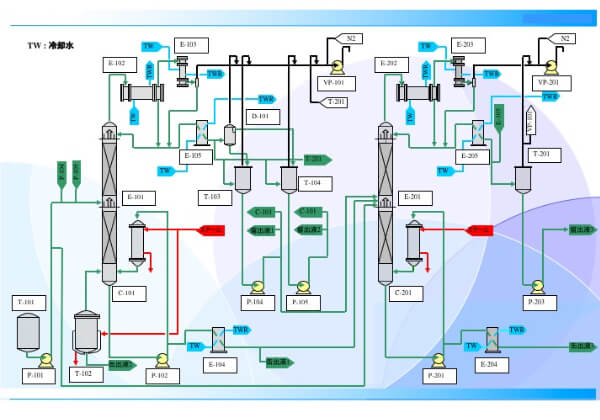
経験と実績をもとに、お客様のニーズに応じた最適な仕様?システムを構築、ご提案いたします。
THREE:On the third day Lord King moved that the Bill was not one of State necessity or expediency. This gave occasion to Lord Liverpool, then at the head of the Government, to express his sentiments upon the measure. He declared upon his honour and in his conscience that, if the Bill passed, he believed the king would not marry again. But if the charges against the queen were proved, it was absolutely impossible not to conclude with an enactment for a divorce. Earl Grey replied to Lord Liverpool, and called upon their lordships, from respect for their own character, not to persevere with the measure before them.On the passage, the squadron of Sir John Warren came in sight of the French fleet of Villaret-Joyeuse, of nine ships of the line, but it bore away, and left them to pursue their course. They entered the Bay of Quiberon on the 25th of June and, after much wrangling as to the best situation for landing, they put the troops ashore at the village of Carnac. There they were immediately joined by Georges Cadoudal, d'All¨¨gre, Dubois-Berthollet, and other Chouan chiefs, with about four thousand or five thousand of their wild and bandit-looking soldiers. Along with the Chouans came troops of peasants, crying "Vive le Roi!" and bringing in abundance of fresh eggs, poultry, and other provisions. Puisaye was delighted, and felt confident that all Brittany was ready to rise. But this delusion was soon dissipated. The Emigrants, accustomed to regular armies, looked with contempt on this wild and ragged band, and they, on their part, were not restrained, on the landing of the arms and uniforms, from seizing and carrying them off, without much exertion on the part of Puisaye. There was danger of bloodshed. At length, in about a couple of days, ten thousand of them were put into red coats, and furnished with muskets. But fatal dissensions prevented all operations. Puisaye proposed to march up the country, seize different towns, such as Vannes and Rennes, and take up their position behind the Mayenne; but d'Hervilly refused to march till the troops were formed into regular regiments, and the Emigrants joined him in despising the Chouans, and in complaining that they had not been taken to La Vend¨¦e to join Charette. Puisaye and d'Hervilly also disputed the supreme command, and Puisaye had to dispatch letters to London, to Count d'Artois, on the subject. At length, after five days had been wasted in this contention, Puisaye proposed that they should endeavour to carry Fort Penthi¨¨vre, which stood on a small peninsula on Quiberon Bay, and was united to the main land by a sandy isthmus. To this d'Hervilly consented, and Sir John Warren agreed to support him in the attempt. On the 1st of July Warren began to bombard the fort, and on the 3rd, the place being warmly assailed by both the British and the Chouans, the Republicans surrendered. Meanwhile, Puisaye had sent off emissaries all over Brittany, to rouse Sc¨¦peaux, Charette, Stofflet, and the rest of the insurgent chiefs. The news of the landing had flown all over Brittany in a few days, and the Royalists were full of joy.
工場建屋、事務所棟、倉庫、試験棟などの建設も一括してご依頼いただけます。
THREE:On the 1st of December, 1837, shortly after the opening of Parliament, Lord John Russell introduced a question of great urgency¡ªthe relief of the Irish poor. After going through, and commenting on, the several recommendations of the Inquiry Commissioners, and noticing the objections to which they were all more or less open, he explained, by way of contrast, the principles on which the present Bill was founded, much in the same manner that he had done on the first introduction of the measure. The statement was generally well received, although there were some marked exceptions in this respect; and the Bill was read a first time without a division. It was, in like manner, read a second time on the 5th of February, 1838; but, on the motion for going into committee, on the 9th, Mr. O'Connell strongly opposed it, and moved that it be committed that day six months. The amendment was, however, negatived by 277 to 25, a majority which made the passing of the measure in some form pretty certain. On the 23rd of February the question of settlement was again very fully discussed, and its introduction opposed by 103 to 31, the latter number comprising all that could be brought to vote for a settlement law of any kind. The vagrancy clauses were for the present withdrawn from the Bill, on the understanding that there would hereafter be a separate measure for the suppression of mendicancy. The Bill continued to be considered in successive committees until the 23rd of March, when, all the clauses having been gone through and settled, it was ordered to be reported, which was done on the 9th of April. On the 30th of April the Bill was read a third time and passed by the Commons, and on the day following was introduced and read a first time in the Lords. Many of the peers, whose estates were heavily encumbered, were alarmed at the threatened imposition of a poor-rate, which might swallow up a large portion of their incomes. Those who were opposed to a poor law on economic principles,[449] appealed to their lordships' fears, and excited a determined opposition against the measure. On the 21st of May there was a stormy debate of nine hours' duration. Lord Melbourne moved the second reading in a judicious speech, in which he skilfully employed the best arguments in favour of a legal provision for the poor, stating that this measure was, in fact, but the extension to Ireland of the English Act of 1834, with such alterations as were adapted to the peculiar circumstances of that country. It would suppress mendicancy, and would abate agrarian violence, while relieving the destitute in a way that would not paralyse the feeling of energy and self-reliance. Among the most violent opponents of the measure was Lord Lyndhurst, who declared that it would lead to a dissolution of the union. The Duke of Wellington, on the contrary, contended that the Bill, if amended in committee, would improve the social relations of the people of Ireland, and would induce the gentry to pay some attention to their properties, and to the occupiers and labourers on their estates. He objected, however, to a law of settlement as leading to unbounded litigation and expense. Owing chiefly to the support of the Duke, the second reading was carried by a majority of 149 to 20. On the motion that the Bill be committed, on the 28th of May, a scene of confusion and violence was presented, surpassing anything that could have been expected in such a dignified assembly. The Irish peers especially were in a state of extreme excitement. The discussion was adjourned to the 31st, and, after a debate of eight hours, the clause embodying the principle of the Bill was adopted by a majority of 107 to 41. The Bill was considered in committee on the 7th, 21st, 22nd, and 26th of June, and was read a third time on the 6th of July. It had now passed the Lords, altered, and in some respects improved; although, in the opinion of its author, the charge upon electoral divisions approximated too nearly to settlement to be quite satisfactory. The Royal Assent was given to the measure on the 31st of July, and thus a law was at length established making provision for the systematic and efficient relief of destitution in Ireland.But the Allies had only fallen back behind the Elbe, and taken up a strong position at Bautzen, on the Spree, about twelve leagues from Dresden, whilst an army under Bülow covered Berlin. No sooner did the Allies fall back to the right bank of the Elbe than Davoust attacked Hamburg on the 9th of May with five thousand men, and vowed vengeance on the city for having admitted the Allies. To their surprise the citizens found themselves defended by a body of Danes, from Altona, who were the allies of France, but had been just then thinking of abandoning Napoleon. But the fate of the battle of Lützen changed their views, and they retired in the evening of that day, leaving Hamburg to the attacks of the French. Bernadotte, not having received the promised reinforcements, did not venture to cover Hamburg. Davoust entered the place like a devil. He shot twelve of the principal citizens, and drove twenty-five thousand of the inhabitants out of the city, pulled down their houses, compelling the most distinguished men of the town to work at this demolition and at raising the materials into fortifications. The people had long been subjected by the French to every possible kind of pillage and indignity; no women, however distinguished, had been allowed to pass the gate without being subjected to the most indecent examinations. But now the fury of the French commander passed all bounds. He levied a contribution of eighteen millions of dollars: and not satisfied with that, he robbed the great Hamburg bank, and declared all his doings to be by orders of the Emperor.
TWO:Buonaparte had arrived at Vittoria on the 8th of November, between the defeat of Blake at Espinosa and his dispersion at Reynosa, and he immediately dispatched Soult to attack Belvedere. This self-confident commander of two-and-twenty¡ªsurrounded by as self-confident students from Salamanca and Leon¡ªinstead of falling back, and forming a junction with Casta?os, stood his ground in an open plain in front of Burgos, and was scattered to the winds. Between three and four thousand of his men were killed, wounded, or taken prisoners, and all his cannon and baggage captured. Buonaparte had now only to beat Casta?os, and there was an end to the whole Spanish force. That general was much more cautious and prudent than the rest, and he fell back on the approach of Marshal Lannes, at the head of thirty thousand men, to Tudela. But Buonaparte had sent numerous bodies of troops to intercept his course in the direction of Madrid, and, unfortunately for Casta?os, he was joined by Palafox, who had made so successful a stand against the French at Saragossa. Casta?os was for retreating still, to avoid Lannes in front, and Ney and Victor, who were getting into his rear; but Palafox, and others of his generals, strongly recommended his fighting, and a commissioner sent from the Junta in Madrid, in the French fashion, to see that he did his duty, joined in the persuasion, by hinting that to retreat would give suspicion of cowardice and treachery. Against his better judgment, Casta?os, therefore, gave battle on the 22nd of November, at Tudela, and was completely routed. Palafox hastened back to Saragossa, which was destined to surrender after another frightful siege. The road was now left open to Madrid, and the French troops had orders to advance and reduce it; and they did this with a fiendish ferocity, burning the towns and villages as they proceeded, and shooting every Spaniard that they found in arms.CONFERENCE BETWEEN THE HOUSES OF PARLIAMENT, 1835. (See p. 392.)
FORE:Strong as was the majority of Ministers, however, the king did not wait for their resigning. The day after this debate (Thursday, December 18th), the king sent, at twelve o'clock at night, to Fox and Lord North an order to surrender their seals of office to their Under-Secretaries, as a personal interview, in the circumstances, would be disagreeable. Fox instantly delivered up his; but Lord North was already in bed, and had entrusted his seal to his son, Colonel North, who could not be found for some time. The Seals were then delivered to Lord Temple, who, on the following day, sent letters of dismissal to all the other members of the coalition Cabinet. Pitt, though in his twenty-fifth year only, was appointed first Lord of the Treasury and Chancellor of the Exchequer, and on him devolved the duty of forming a new Administration. Earl Gower was nominated President of the Council, and Lord Temple one of the Secretaries of State. When the House of Commons met in the afternoon, Fox imagined, from a motion of Dundas to proceed to business without the usual adjournment on Saturday, that it was the object of the new party to pass certain money Bills, and then resort to a dissolution. Fox opposed the motion, declaring that a dissolution at this moment would produce infinite damage to[304] the service of the nation, and that, should it take place in order to suit the convenience of an ambitious young man (meaning Pitt), he would, immediately on the meeting of the new House, move for an inquiry into the authors and advisers of it, in order to bring them to punishment. This caused Lord Temple, who had occasioned the breaking up of the Coalition, to resign again immediately, declaring that he preferred meeting any aspersions upon him in his private and individual capacity. This certainly removed a great danger from his colleagues, although it rendered the task of his friend and relative, Pitt, still more difficult, in having to form an Administration alone. The Ministry was then filled up thus:¡ªLord Sydney, Secretary of State for the Home Department; the Marquis of Carmarthen for the Foreign; the Duke of Rutland, Lord Privy Seal; Lord Gower became President of the Council; the Duke of Richmond, Master-General of the Ordnance; Lord Thurlow again Chancellor; Lord Howe, First Lord of the Admiralty. With the exception of Pitt, the whole of the Cabinet was drawn from the House of Lords. When the Commons met, on the 22nd, Mr. Bankes said he was authorised by Mr. Pitt, who was not in the House, a new writ for Appleby being moved for on his appointment to office, to say that he had no intention to advise a dissolution. His Majesty, on the 24th of December, having also assured the House that he would not interrupt their meeting after the recess by either prorogation or dissolution, the House adjourned till the 12th of January, 1784.
THREE:When the new Parliament met, on the 18th of May, it was seen how completely Fox and North had destroyed their prestige by their late factious conduct, and how entirely Pitt had made himself master of the situation. His patience and cool policy under the tempestuous assaults of the Opposition had given the country a wonderful confidence in him. One party extolled him as the staunch defender of the prerogative, another as the champion of reform and enemy of aristocratic influence. Not less than one hundred and sixty of the supporters of the late Coalition Ministry had been rejected at the elections, and they were held up to ridicule as "Fox's Martyrs."Still the affairs of Wilkes continued to occupy almost the sole thought and interest of the Session. On the 23rd of November the question of privilege came up; and though he was absent, having been wounded in a duel, it was actively pushed by the Ministers. Mr. Wilbraham protested against the discussion without the presence of Wilkes, and his being heard at the bar in his defence. Pitt attended, though suffering awfully from the gout, propped on crutches, and his very hands wrapped in flannel. He maintained the question of privilege, but took care to separate himself from Wilkes in it. The rest of the debate was violent and personal, and ended in voting, by two hundred and fifty-eight against one hundred and thirty-three, that the privilege of Parliament did not extend to the publication of seditious libels; the resolution ordering the North Briton to be burnt by the hangman was confirmed. These votes being sent up to the Lords, on the 25th they also debated the question, and the Duke of Cumberland, Lord Shelburne, and the Duke of Newcastle, defended the privilege of Parliament as violated in the person of Wilkes. In the end, however, the Ministers obtained a majority of a hundred and fourteen against thirty-eight. Seventeen peers entered a strong protest against the decision. On the 1st of December there was a conference of the two Houses, when they agreed to a loyal address to the king, expressing their detestation of the libels against him.
FORE:
設備の構成要素の詳細な仕様や配置を決定し、図面を作成します。
FORE:The Sovereigns of the Holy Alliance, however, acted on principles and with designs very different. Their general principle was not to tolerate any change in the European Governments that did not emanate from themselves. The Greek Revolution they denounced as a rebellion against the legitimate authority of the Sultan. The actual Government of Spain they regarded as incompatible with the safety of monarchical power, and France called upon the Sovereigns to re-establish the despotism of Ferdinand. Russia, Austria, and Prussia took the same view of the Spanish Revolution, but were unwilling to interfere by force of arms. France was not so scrupulous upon that point. Chateaubriand and other votaries of absolutism in Church and State were busy fomenting conspiracies in Spain, and secretly supplying arms and ammunition to the priest-ridden enemies of constitutional government in that country. An army which during the previous year had been assembled on the frontier, under the ridiculous pretence of preventing the fever at Barcelona from spreading into France, changed its name from that of a sanitary cordon to an army of observation. M. de Villele, the new French Prime Minister, threw off the mask, and in a circular note stated that unless Spain altered her political constitution, France would use force to convert her from her revolutionary theories.[584]
FORE:Various inquiries had been instituted from time to time by royal commissions and Parliamentary committees into the state of education in Ireland. One commission, appointed in 1806, laboured for six years, and published fourteen reports. It included the Primate, two bishops, the Provost of Trinity College, and Mr. R. Lovell Edgeworth. They recommended a system in which the children of all denominations should be educated together, without interfering with the peculiar tenets of any; and that there should be a Board of Commissioners, with extensive powers, to carry out the plan. Subsequent commissions and committees adopted the same principle of united secular education, particularly a select committee of the House of Commons appointed in 1824. These important reports prepared the way for Mr. Stanley's plan, which he announced in the House of Commons in July, 1832. His speech on that occasion showed that he had thoroughly mastered the difficult question which he undertook to elucidate. It was remarkable for the clearness of its statements, the power of its arguments, and for the eloquence with which it enforced sound and comprehensive principles. Mr. Spring-Rice having moved that a sum of ¡ê30,000 be granted for enabling the Lord-Lieutenant of Ireland to assist in the education of the people, and the House having agreed to the motion without a division, Mr. Stanley, in the following month, wrote a letter to the Duke of Leinster, in which he explained "the plan of national education," which afterwards bore his name. The first Commissioners were the Duke of Leinster, Archbishop Whately, Archbishop Murray, the Rev. Dr. Sadleir, Rev. James Carlile (Presbyterian), A. R. Blake (Chief Remembrancer, a Roman Catholic), and Robert Holmes, a Unitarian barrister. Mr. Carlile, minister of Mary's Abbey congregation in Dublin, was the only paid commissioner, and to him, during seven years, was committed a principal share in working the system. He selected the Scripture lessons, directed the compilation of the schoolbooks, aided in obtaining the recognition of parental rights, apart from clerical authority; in arranging the machinery and putting it in working order.
FORE:Mr. Villiers's annual motion, brought forward on the 25th of June, was scarcely more successful than that of Mr. Cobden. Lord John Russell still harped upon his fixed idea of a fixed duty. In his view the country suffered not from the Corn Law, but only from the form in which it was administered. He said he was not prepared to say either that the Corn Law should be at once abolished, or that the existing law should be maintained. While such was the feeble policy of the leader of that Whig party which had set up a claim to a sort of monopoly of Free Trade principles, it was no wonder that the country began to look for relief to the Minister who had introduced the tariff of 1842; but Sir Robert Peel as yet moved too slowly to rouse the enthusiasm in his favour of the Anti-Corn-Law League. "There were not," he remarked, "ten reflecting men out of the Anti-Corn-Law League, who did not believe that a sudden withdrawal of protection, whether it were given to domestic or colonial produce, would cause great confusion and embarrassment. In the artificial state of society in which we lived we could not act on mere abstract philosophical maxims, which, isolated, he could not contest; they must look to the circumstances under which we have grown up, and the interests involved. Ireland, dependent on England for a market for her agricultural produce, was a case in point. He was not prepared to alter the Corn Law of 1842, and did not contemplate it. Seeing that Lord John Russell had avowed himself a consistent friend to Protection, and was opposed to total repeal, he thought he was somewhat squeamish in flying from his difficulty, and declining to vote against the motion. As to the Corn Law, the Government did not intend to alter it, or diminish the amount of protection afforded to agriculture." On the division the numbers for the motion were[512] 124, and against it, 330. On the whole, the cause of Free Trade made but small progress in Parliament in this year, though out of doors the agitation was carried on with ever-increasing vigour. As regards Mr. Villiers's motion, the progress made was shown principally in the decrease of the majority against it. In 1842, when he first put the question of total repeal on issue before the House, he had 92 votes, and 395 against him; in 1843 he had 125 votes, and 381 against him; in 1844, 124 votes, and 330 against him.
FORE:When these arrangements became known, the Tory party grew dreadfully exasperated. But not the Tories only¡ªthere were throngs of Whigs who had battled zealously for the same object, and with the same hope of personal benefit, and yet they were passed over, and Pulteney, Carteret, and their immediate coterie had quietly taken care of themselves, and thrown their coadjutors overboard. A meeting was appointed between Pulteney and the rest already in office, and the Duke of Argyll, Chesterfield, Cobham, Bathurst, and some others. The Prince of Wales was present, and the different claims were discussed. Argyll was satisfied by being made Master-General of the Ordnance, Colonel of His Majesty's Royal Regiment of Horse Guards, Field-Marshal and Commander-in-Chief of all the forces in South Britain. Chesterfield got nothing, professing to wait to see a more thorough change of men before he went amongst them; but Cobham was made a Field-Marshal, and restored to the command of the Grenadier Guards, but he could get nothing for his nephew, the fiery Oppositionist, Lyttelton. Lord Harrington was made an Earl and President of the Council. But what surprised the country most was that Pulteney, hitherto the head and soul of the party, should have been content to sacrifice himself for the sake of a title. He was made Earl of Bath and received a place in the Cabinet; but by this change, although he seemed to have a brilliant career before him, he forfeited the confidence of the country, which had always looked up to him as the most determined and disinterested of patriots. From this moment he sank into insignificance and contempt. Some others of the old officials remained in as well as Newcastle. Sir William Yonge and Pelham, brother of Newcastle, retained their posts, Yonge as Secretary of War, and Pelham as Paymaster of the Forces.
プラント、機器の安全と安定稼働のために、定期的なメンテナンスをお薦めいたします。
FORE:FIVE-SHILLING PIECE OF THE SOUTH SEA COMPANY.
TWO:One of the most charming poets of the time was Mrs. Hemans, whose maiden name was Felicia Dorothea Browne, daughter of a Liverpool merchant, and sister of Colonel Browne, a distinguished officer, who was for many years one of the Commissioners of the Metropolitan Police in Dublin. In 1819 she obtained a prize of ¡ê50 for the best poem on the subject of Sir William Wallace; and in 1821 that awarded by the Royal Society of Literature for the best poem on the subject of Dartmoor. Her next production was a tragedy, "The Vespers of Palermo," which was unsuccessful on the stage. "The Forest Sanctuary" appeared in 1826, and in 1828 "Records of Woman." In 1830 appeared "Songs of the Affections," and four years later, "National Lyrics," "Hymns for Childhood," and "Scenes and Hymns of Life." There was a collective edition of her works published, with a memoir by her sister, in 1839, and several other editions subsequently, not only in Great Britain, but in America, where her poems were exceedingly popular. She died in 1835.
TWO:On the 9th of August, 1834, a fire broke out in part of the Dublin Custom House, one of the finest buildings in the United Kingdom. Owing to the immense quantity of combustible materials, the fierceness of the conflagration was something terrific. By great exertion the building was saved. This fire naturally produced a great sensation throughout the United Kingdom, but it was nothing in comparison to the interest excited by the burning of the two Houses of Parliament, which occurred on the 16th of October, 1834. According to the report of the Lords of the Privy Council, who inquired into the cause of the fire, the tally-room of the exchequer had been required for the temporary accommodation of the Court of Bankruptcy, and it was necessary to get rid of a quantity of the old exchequer tallies, which had accumulated till they would have made about two cartloads. These tallies had been used for kindling the fires. On one occasion a quantity of them was burned in Tothill Fields. There had been a question as to the best mode of getting rid of them, and it was ultimately resolved that they should be carefully and gradually consumed in the stoves of the House of Lords. But the work had been committed to workmen who were the reverse of careful. They heaped on the fuel, nearly filling the furnaces, and causing a blaze which overheated the flues. The housekeeper of the Lords' chamber sent to them several times during the day, complaining of the smoke and heat, but they assured her there was no danger. About four o'clock in the afternoon two strangers were admitted to see the House of Lords, and found the heat and smoke so stifling, that they were led to examine the floor, when they perceived that the floor-cloth was "sweating." At six o'clock the pent-up flames broke forth through the windows, and immediately the alarm was spread in all directions. The Ministers, the king's sons, Mr. Hume, and others, were presently on the spot, and did all they could in the consternation and confusion. The law courts were saved by having their roofs stripped off, and causing the engines to play on the interior. The greatest efforts were made to save Westminster Hall, which was happily preserved; but the two Houses of Parliament were[377] completely destroyed, together with the Commons' library, the Lords' painted chamber, many of the committee rooms, part of the Speaker's house, the rooms of the Lord Chancellor and other law officers, as well as the kitchen and eating-rooms. The king promptly offered Parliament the use of Buckingham Palace; but it was thought best to fit up temporary rooms on the old site, and to have them ready for next Session. The committee of the Privy Council sat for several days, and during the whole of that time the fire continued to smoulder among the d¨¦bris, and in the coal vaults, while the engines were heard to play from day to day within the boarded avenues. As soon as possible the temporary halls were prepared. The House of Lords was fitted up for the Commons, and the painted chamber for the Lords, at an expense of ¡ê30,000.
The restless spirit of Buonaparte did not allow him any repose, even after his subjugation of the greater part of the north of Europe. Whilst he had been contending with the Russians, he had been planning fresh campaigns¡ªfresh conquests at the opposite extremity of the Continent. Godoy, the favourite of the King of Spain, and the paramour of his dissolute queen, who had professed great admiration of Buonaparte, seeing him so deeply engaged in Germany, had suddenly called out a considerable army, and addressed it in a vaunting but mysterious way. The news of this reached Buonaparte on the field of Jena, and, discovering by this means the real sentiments of the Spanish favourite towards him, he vowed vengeance on Spain. It was by no means the first time that he had contemplated the conquest of Spain and Portugal, but this circumstance inspired him with a new impulse in that direction, and a plausible excuse. In his interviews with Alexander of Russia, these views had been avowed; and now, no sooner had he returned to Paris than he commenced his operations for that purpose. He blended this scheme, at the same time, with his great one of shutting out the British trade from the whole Continent. Russia had, by the Treaty of Tilsit, entered into a compact to enforce his system in her ports. Holland was compelled to submit to it. The kingdom of Westphalia was now in the hands of his brother Jerome, who had been forced to separate from his American wife, Elizabeth Paterson, and had been married to a daughter of the King of Würtemberg, so that the territories now comprised in the new kingdom of Westphalia were under the same law of exclusion. He had extended it to the Prussian ports since his conquest of that country, and to the Hanseatic towns. Denmark was ready to comply, and the treaty with Russia extended his embargo ostensibly to the whole western shores of the Baltic. Sweden refused to accept it, and the foolhardy King Christian IV. declared war on Russia, and invaded Norway. He promptly lost Finland and Pomerania. Sir[547] John Moore, with an army of 10,000 men, was sent to his assistance, but found him so unreasonable that he thought it better to return without landing the troops. Christian was soon afterwards deposed, and his uncle established in his place, who accepted the Continental system. But Alexander was as little faithful in this part of the Treaty as in other parts. In fact, he dared not strictly enforce the exclusion of British trade, were he so disposed. Nearly the whole heavy produce of Russia¡ªhemp, iron, timber, wax, pitch, and naval stores, which constituted the chief revenues of the Russian nobles¡ªwas taken by the British, and paid for in their manufactures. To have cut off his trade would have made the life of Alexander as little secure as that of his father, Paul, had been. The Russian and British trade therefore continued, under certain devices, and notwithstanding the decrees of the Czar to the contrary. Buonaparte knew it, but was not prepared to open up a new war with Russia on that account¡ªat least, at present. He was now turning his attention to the south.
In 1817 the number of power-looms in Lancashire was estimated at 2,000, of which only about 1,000 were then in employment, and the wages had fallen below the rate at which goods could be produced by machinery. To the power-loom, therefore, the hand-loom weavers gradually gave way. In 1832 there were 80,000 power-looms in Lancashire, employing persons of both sexes and of all ages from nine years upwards, at rates of wages varying from half-a-crown to ten shillings a week. In 1817 the estimated number of persons employed in the spinning of cotton in Great Britain was 110,763, and the quantity of yarn produced was under 100,000,000 lbs.; in 1853 the yarn spun was nearly 700,000,000 lbs. In 1838 the total number of cotton factories in Great Britain and Ireland was 1,815, of which there were in England and Wales, 1,599; in Scotland, 192; in Ireland, 24. The total number of persons employed in these factories was 206,000, of whom 145,934 were females.
ONE:The spirits of the Americans had been raised by the success of attempts against the forts of Ticonderoga and Crown Point, on Lake Champlain. Early in the spring, some of the leading men of Connecticut, and chief amongst them Wooster and Silas Deane, projected this expedition, as securing the passes into Canada. The volunteers who offered for this enterprise were to march across the frontiers of New York, and come suddenly on these forts. The wretched condition of carelessness existing in these important outposts, notwithstanding the alarming state of the colonies, may be known by the result. Phelps, disguised as a countryman, entered the fort on pretence of seeking a barber; and, whilst roaming about in feigned search of him, noted well the ruinous condition of the fort, and the utter negligence of the guard. The next day, Ethan Allen went alone to the fortress, ostensibly on a visit to his friend the commander, leaving his troops concealed in the wood. He represented that he wanted to conduct some goods across the lake, and borrowed twenty of his soldiers to help him. These men he made dead-drunk; and then, rushing suddenly to the fort, where there were only twenty-two soldiers more, he compelled them in their surprise to lay down their arms, set a guard over them, and entered his friend's bed-room and pronounced him a prisoner. He then advanced against the fort of Crown Point, where he found only a garrison of twelve men, and immediately afterwards secured Skenesborough, the fortified house of Major Skene, and took his son and his negroes.The excitement, both at Court and in the country, was far beyond the then apparent value of the islands; but there had been an insult to the British flag, and both Government and Opposition demanded expiation. Lord North displayed a bold and determined tone on the occasion. Orders were sent over to the British ambassador, at Madrid, to demand an immediate disavowal of Buccarelli's act, and instant measures were taken for war, in case of refusal. Ships were refitted, their commanders named, stores were put on board, and orders for pressing men, according to the custom of the time, were issued. But in London these preparations met with resistance from the opposition spirit of the Corporation. Things, however, seemed tending strongly towards war. Our Charg¨¦ d'affaires at Madrid, in absence of the ambassador, was Mr. Harris, the son of the author of "Hermes." He was but a youth of four-and-twenty, but already displayed much of the talent which raised him to the title of Malmesbury. He wrote home that the King of Spain and some of his Ministers were averse from the idea of war, and unprepared for it; but that others were influenced by Choiseul, the French Premier, and demanded a vigorous attack on England.
ONE:The western extremity of Lake Erie was the scene of a most unequal contest at the commencement of 1813. Colonel Procter lay near Frenchtown, about twenty miles from Detroit, with about five hundred troops, partly regulars, partly militia and sailors. In addition, he was supported by about the same number of Red Indians. The Americans, under General Winchester¡ªan old officer of the War of Independence¡ªamounted to one thousand two hundred men. With these Winchester had scoured the Michigan country, and, at the end of January, advanced to attack Procter. Sir George Prevost had commanded Procter to act on the defensive; but scorning this cowardly advice, he suddenly advanced by night, as the Americans had quartered themselves in Frenchtown, surprised, and captured or destroyed the whole of them, except about thirty who escaped into the woods. Winchester himself was seized by Round Head, the Indian chief, who arrayed himself in his uniform, and then delivered him up to Colonel Procter. From this point Colonel Procter hastened to cross the lake in a flotilla, and attack General Harrison at Fort Meigs. He knew that Harrison was expecting strong reinforcements, and he was anxious to dislodge him before they arrived. Procter had with him one thousand men, half regulars, half militia, and one thousand two hundred Indians; but Harrison's force was much stronger, and defended by a well-entrenched camp. Procter erected batteries, and fired across the river Miami, endeavouring to destroy the American block-houses with red-hot shot, but they were of wood too green to take fire. On the 5th of May Harrison's expected reinforcements came down the river in boats, one thousand three hundred strong. Harrison now commenced acting on the offensive, to aid the disembarkation of the troops; but he was defeated by Procter, who routed the whole of the new forces, under General Clay, took five hundred and fifty prisoners, and killed as many more. But his success had its disadvantage. His Indian allies, loaded with booty, returned to the Detroit frontier, and the Canadian militia to their farms. Procter was[107] compelled, therefore, to leave Harrison in his camp, and return also to Detroit, for Sir George Prevost had provided him with no new militia, or other force, to supply the place of those gone. Still worse, Prevost could not even be prevailed on to send sailors to man the few British vessels on Lake Erie, where the American flotilla was now far superior to the British one. In vain did Captain Barclay, who commanded the little squadron, urge Prevost to send him sailors, or the few vessels must be captured or destroyed; in vain did Colonel Procter urge, too, the necessity of this measure. Sir George, who took care to keep out of harm's way himself, sent taunting messages to Captain Barclay, telling him that the quality of his men made up for the inferiority of numbers, and that he ought to fight. Barclay, who was as brave a man as ever commanded a vessel, and had lost an arm in the service, but who did not pretend to do impossibilities, was now, however, stung to give battle. He had three hundred and fifty-six men¡ªfew of whom were experienced seamen¡ªand forty-six guns of very inferior description. The American commodore, Percy, had five hundred and eighty men, and fifty-four guns, with picked crews on all his vessels. Barclay fought till he had taken Percy's ship, and lost his remaining arm. In the end the British vessels were compelled to strike, but not till they had lost, in killed and wounded, one hundred and thirty-five men, and had killed and wounded one hundred and twenty-three of the Americans. This success enormously elated the Americans, and they now confidently calculated on defeating Procter, and annexing Upper Canada. Harrison made haste to interpose nearly six thousand men between Procter¡ªwho had now only five hundred, and as many Indians¡ªand the country on which he was endeavouring to retreat. The forces of Procter were compelled to give ground, and Harrison inflicted a severe revenge on the Indians, for their slaughter of the Americans at Meigs. The chief, Tecumseh, being killed, they flayed him, and cut up his skin into razor-straps, as presents to the chief men of the Congress, and Mr. Clay is said to have boasted the possession of one of these. The American armies now put themselves on the track for Kingston and Montreal. Harrison marched along the shore of Lake Erie with upwards of five thousand men, and General Wilkinson, with ten thousand more, crossed Lake Ontario, towards Kingston, to join him. General Hampton, at the same time also, was marching on Montreal. Sir George Prevost was in the utmost alarm, and sent orders to General Vincent to fall down to Kingston, leaving exposed all Upper Canada. But as General Rottenburg was moving on Kingston, Vincent, who was now joined by the remainder of Procter's force, determined to disobey these orders; and several general officers confirmed him in this resolution, and offered to share the responsibility. This was the salvation of Upper Canada. The three American generals were attacked and routed. The Canadian militia did good service, and the Americans were completely driven out of both Upper and Lower Canada before winter. In their retreat they grew brutal, and committed savage cruelties on the unarmed population. They burnt down the town of Newark, near Fort George, driving about four hundred women and children out of it into the snow. They destroyed various villages in their route. This ferocity excited the British and Canadians to retaliation. Colonel Murray crossed the water, and pursued them in their own territories. He attacked and carried Fort Niagara, killed or made prisoners of the whole garrison, and captured the arms and stores. General Hull came up, with two thousand men, to check the march of Murray, who with one thousand regulars and militia, and between three and four hundred Indians, on the 30th of December, repulsed him with great slaughter, pursued him, and¡ªto avenge the poor Canadians¡ªset fire to Buffalo and the village of Black Rock. The whole of that frontier was thus left defenceless.
TWO:The impeachment of Oxford followed. On the 9th of July, 1715, Lord Coningsby, attended by many of the Commons, carried up to the Lords the articles against him, sixteen in number, to which afterwards six more were added. The first fifteen related to the Peace of Utrecht; the sixteenth to the sudden creation of twelve peers in 1711, in order to create a Tory majority, by which it charged him with highly abusing the constitution of Parliament and the laws of the kingdom. When the Articles had been read, it was doubted whether any of the charges amounted to high treason. To decide this as a legal point, it was moved that the judges should be consulted; but this motion was rejected, and another was made to commit Oxford to the Tower; and, though reprieved a few days on account of an indisposition, he was committed accordingly, having made a very solemn plea of his innocence, and of having only obeyed the orders of the queen, without at all convincing the House. He continued to lie in the Tower for two years before he was brought to trial, matters of higher public interest intervening. Eventually the impeachment was dropped, the documentary evidence being considered insufficient.
TWO:One important result of this terrible distress was to force on emigration to a large extent, and thus to people the American States. Emigration at that time was without any guidance, and the result was a vast amount of disappointment and suffering among the emigrants. Consequently, Mr. Wilmot Horton moved for a select committee to inquire into the expediency of encouraging emigration from the United Kingdom. The committee was appointed, and presented its report and evidence before the dissolution of Parliament, with a recommendation that the subject should be pursued without loss of time.
FORE:The Repeal Agitation in Ireland, which had been thoroughly organised in 1842 by "Repeal Missionaries" who had visited every parish in the country, reached its culminating point in 1843. Early in February that year Mr. O'Connell, who had filled the civic chair the previous year, and was then an alderman of the Dublin Corporation, gave notice that, on the 21st of that month, he would move a resolution, affirming the right of Ireland to a resident Parliament, and the necessity of repealing the union. Alderman Butt expressed his determination of opposing the motion. Mr. Butt was one of the ablest members of the Irish bar, and a leader of the Conservative party. The debate was therefore anticipated with the greatest interest, as it promised to be a very exciting political duel. The old Assembly House, since abandoned for the more commodious City Hall, was densely crowded by the principal citizens, while the street was thronged by the populace during the debate. Mr. O'Connell marshalled his arguments under many heads: Ireland's capacity for independence¡ªher right to have a Parliament of her own¡ªthe establishment of that right in 1782¡ªthe prosperity that followed¡ªthe incompetence of the Irish Parliament to destroy the Constitution¡ªthe corrupt means by which the union was carried¡ªits disastrous results, and the national benefits that would follow its repeal. The speech, which lasted four hours, was mainly argumentative and statistical. It was accepted by his followers as an elaborate and masterly statement of the case. Mr. Butt replied with equal ability and more fervid eloquence. The debate was adjourned. Next day other members took part in it. It was again adjourned, and as the contest proceeded the public excitement rose to fever heat. At two o'clock on the third day Mr. O'Connell rose to reply. "No report," says Mr. O'Neil Daunt, "could possibly do justice to that magnificent reply. The consciousness of a great moral triumph seemed to animate his voice, his[526] glance, and his gestures. Never had I heard him so eloquent, never had I witnessed so noble a display of his transcendent powers." The division showed that 41 were in favour of a domestic legislature and 15 were opposed to it.
TWO:The butcheries were not terminated till late at night; but the shouts of victory had, so early as eleven o'clock in the morning, informed the Assembly that the people were masters of the[404] Tuileries. Numbers of the insurrectionists had appeared at the Assembly from time to time, crying, "Vive la Nation!" and the members replied with the same cry. A deputation appeared from the H?tel de Ville, demanding that a decree of dethronement should be immediately passed, and the Assembly so far complied as to pass a decree, drawn up by that very Vergniaud who had assured the king that the Assembly was prepared to stand to the death for the defence of the constituted authorities. This decree suspended the royal authority, appointed a governor for the Dauphin, stopped the payment of the Civil List, but agreed to a certain allowance to the royal family during the suspension, and set apart the Luxembourg for their residence. The Luxembourg Palace being reported full of cellars and subterranean vaults and difficult of defence, the Temple, a miserable dilapidated old abbey, was substituted, and the royal family were conveyed thither.The state of Ireland continued to excite the greatest alarm from the prorogation of Parliament to the end of the year. The language of the speakers in the Association became more violent, and the harangues of the priests more inflammatory. In the counties of Tipperary and Limerick large bodies of men were accustomed to assemble on Sundays, and to parade in military order, carrying banners. These bands were regularly organised and admirably commanded. The Irish Government, from time to time, reported the progress of this formidable organisation. In one place as many as 700 "cavalry" would assemble, with thousands of infantry, and go through military evolutions. These were surrounded by thousands of the peasantry. Amongst the persons thus paraded were some of the most abandoned characters in the country, men who had notoriously been concerned in the perpetration of murder, and for the apprehension of whom large rewards had been offered in vain by the Government. These demonstrations, as might be expected, excited the greatest alarm among the Protestants of the south, as well as the peaceably disposed Roman Catholics. One ominous circumstance connected with them was the fact that the dissuasions of the priests against the meetings in military array were disregarded. Mr. Lawless, an active member of the Association, marched northward at the head of 10,000 Roman Catholics. In the county of Monaghan, the Orangemen, apprised of their approach, took possession of the town of Ballyhay in large numbers, prepared to encounter the southern invaders of Ulster. As the Orangemen were well armed, and excited to the utmost, a bloody battle would have ensued, had not Lawless beaten a timely retreat. Getting out of his carriage, and mounting a swift horse, he galloped off, amidst the indignant shouts of his followers.
The growth of our commerce during these seventy-two years is shown by the amount of our exports. In 1697¡ªthat is, nine years after the Revolution¡ªthe amount of exports was only ¡ê3,525,907; but in the three next years of peace they rose to ¡ê6,709,881. War reduced these again to little more than ¡ê5,000,000, and at the end of the reign of Anne, during peace, they rose to ¡ê8,000,000. At the end of the reign of George I. the war had so much checked our commerce, that the exports scarcely amounted to that sum, the average of the three years¡ª1726, 1727, and 1728¡ªbeing only ¡ê7,891,739. By the end of the reign of George II., however (1760), they had risen to ¡ê14,693,270. Having by this period driven the fleets of France and Spain from the ocean, we rather extended our commerce than injured it. Thus, during these seventy-two years, our exports had increased from about three millions and a half annually to more than fourteen millions and a half annually, or a yearly difference of upwards of eleven millions¡ªa most substantial growth.The manner in which a great deal of these vast sums, so freely voted, was spent, was, at this very moment, staring the public most fully in the face, through the military inquiry set on foot under the administration of Pitt, and continued under the present Ministry. It appeared that one Davison, being made Treasurer of the Ordnance by Pitt, had been in the habit of drawing large sums from the Treasury long before they were wanted, and had generally from three million to four million pounds of the national funds in his hands to trade with, of which the country lost the interest! Nor was this all: there had been an understanding between himself, Delauny, the Barrackmaster-General, and Greenwood, the army agent. All these gentlemen helped themselves largely to the public money, and their accounts were full of misstatements and overcharges. Those of Delauny were yet only partly gone through, but there was a charge of ninety thousand pounds already against him for fraudulent entries and impositions. As for Davison, there was found to be an arrangement between him and Delauny, by which, as a contractor, he was to receive of Delauny two-and-a-half per cent. on beds, sheets, blankets, towels, candles, beer, forage, etc., which he furnished for barrack use. Besides this, he was to supply the coals as a merchant. Having always several millions of the country's money in hand, he bought up the articles, got his profit, and then his commission, without any outlay of his own. Lord Archibald Hamilton gave notice of a motion for the prosecution of Davison at common law, but Ministers said they had put the matter into the proper hands, and that Davison had been summoned to deliver up all his accounts that they might be examined, and measures taken to recover any amount due by him to the Treasury. But Lord Henry Petty talked as though it was not certain that there were sufficient proofs of his guilt to convict him. The Attorney-General, however, was ordered to prosecute in the Court of King's Bench, but the decision did not take place till April, 1809, more than two years afterwards, and then only the miserable sum of eighteen thousand one hundred and eighty-three pounds had been recovered, and Davison was condemned to twenty-one months' imprisonment in Newgate.This contest excited universal interest. Mr. O'Connell, the Roman Catholic candidate, was not unknown in England. He had come to London as the leading member of a deputation to urge the concession of Catholic Emancipation upon the Government and the legislature, when he met a number of the leading statesmen of the day at the house of the Duke of Norfolk. He had been examined by a committee of the Lords, together with Dr. Doyle, in 1825, on which occasion the ability he displayed, his extensive and accurate knowledge, his quickness in answering, and the clearness with which he conveyed information, excited the admiration of all parties. In the appeal case of Scully versus Scully he pleaded before Lord Eldon. It was the first time he had appeared in his forensic character in England. No sooner had he risen to address their lordships than it was buzzed about the precincts of Westminster, and persons of all descriptions crowded in with anxious curiosity to witness the display, including several peers and members of Parliament. He addressed their lordships for nearly two hours, during which the Lord Chancellor paid him great attention, though he had only thirty-three hours before carried the House of Lords with him in rejecting the Bill by which the great advocate would have been admitted to the full privileges of citizenship. Referring to this subject, Lord Eldon wrote in his diary, "Mr. O'Connell pleaded as a barrister before me in the House of Lords on Thursday. His demeanour was very proper, but he did not strike me as shining so much in argument as might be expected from a man who has made so much noise in his harangues in a seditious association." Lord Eldon's opinion was evidently tinged by the recollection of the "seditious harangues." It is a curious fact that the leading counsel on that occasion on the same side was Sir Charles Wetherell, then Solicitor-General. The English admired the rich tones of O'Connell's voice, his clear and distinct articulation, his legal ingenuity, and the readiness with which he adapted himself to the tribunal before which he pleaded. One of the best speeches he ever made was delivered at the great meeting of the British Catholic Association, the Duke of Norfolk presiding. He astonished his auditory on[271] that occasion. In fact, he was regarded as a lion in London. He won golden opinions wherever he went by his blandness, vivacity, and wit in private, and his lofty bearing in public. His commanding figure, his massive chest, and his broad, good-humoured face, with thought and determination distinctly marked in his physiognomy, showed that he had the physique of a great leader of the masses, while he proved himself amongst his colleagues not more powerful in body than in mind and will. The confidence reposed in him in Ireland was unbounded. He was indeed the most remarkable of all the men who had ever advocated the Catholic claims; the only one of their great champions fit to be a popular leader. Curran and Grattan were feeble and attenuated in body, and laboured under physical deficiencies, if the impulsive genius of the one or the fastidious pride of the other would have permitted them to be demagogues; O'Connell had all the qualities necessary for that character in perfection¡ªunflinching boldness, audacious assertion, restless motion, soaring ambition, untiring energy, exquisite tact, instinctive sagacity, a calculating, methodising mind, and a despotic will. He was by no means scrupulous in matters of veracity, and he was famous for his powers of vituperation; but, as he was accustomed to say himself, he was "the best abused man in Ireland."But we come now to a new phase in the Poor-Law system, rather a complete revolution, by which the flood-gates of pauperism were opened, and all those barriers that had restrained the increase of population were swept away. The old system had been somewhat relaxed in 1782 by Mr. Gilbert's Act, which, by incorporating parishes into unions, prevented grasping landlords and tenants from feeling that intense interest in the extinction of population and pauperism which they did when the sphere was limited to a single parish. But in the year 1795 the price of corn rising from 54s. to 74s., and wages continuing stationary, the distress of the poor was very great and many of the able-bodied were obliged to become claimants for parish relief. But instead of meeting this emergency by temporary expedients and extra grants suited to the occasion, the magistrates of Berks and some other southern counties issued tables showing the wages which they affirmed every labouring man ought to receive, not according to the value of his labour to his employer, but according to the variations in the number of his family and the price of bread; and they accompanied these tables with an order directing the parish officers to make up the deficit to the labourer, in the event of the wages paid him by his employer falling short of the tabulated allowance. This was the small beginning of a gigantic evil. The practice originating in a passing emergency grew into a custom, and ultimately assumed the force of an established right, which prevailed almost universally, and was productive of an amount of evil beyond anything that could have been conceived possible. The allowance scales issued from time to time were framed on the principle that every labourer should have a gallon loaf of standard wheaten bread weekly for every member of his family, and one over. The effect of this was, that a man with six children, who got 9s. a week wages, required nine gallon loaves, or 13s. 6d. a week, so that he had a pension of 4s. 6d. over his wages. Another man with a wife and five children, so idle and disorderly that no one would employ him, was entitled to eight gallon loaves for their maintenance, so that he had 12s. a week to support him. The increase of allowance according to the number of children acted as a direct bounty upon early marriage.










 FORE:Strong as was the majority of Ministers, however, the king did not wait for their resigning. The day after this debate (Thursday, December 18th), the king sent, at twelve o'clock at night, to Fox and Lord North an order to surrender their seals of office to their Under-Secretaries, as a personal interview, in the circumstances, would be disagreeable. Fox instantly delivered up his; but Lord North was already in bed, and had entrusted his seal to his son, Colonel North, who could not be found for some time. The Seals were then delivered to Lord Temple, who, on the following day, sent letters of dismissal to all the other members of the coalition Cabinet. Pitt, though in his twenty-fifth year only, was appointed first Lord of the Treasury and Chancellor of the Exchequer, and on him devolved the duty of forming a new Administration. Earl Gower was nominated President of the Council, and Lord Temple one of the Secretaries of State. When the House of Commons met in the afternoon, Fox imagined, from a motion of Dundas to proceed to business without the usual adjournment on Saturday, that it was the object of the new party to pass certain money Bills, and then resort to a dissolution. Fox opposed the motion, declaring that a dissolution at this moment would produce infinite damage to[304] the service of the nation, and that, should it take place in order to suit the convenience of an ambitious young man (meaning Pitt), he would, immediately on the meeting of the new House, move for an inquiry into the authors and advisers of it, in order to bring them to punishment. This caused Lord Temple, who had occasioned the breaking up of the Coalition, to resign again immediately, declaring that he preferred meeting any aspersions upon him in his private and individual capacity. This certainly removed a great danger from his colleagues, although it rendered the task of his friend and relative, Pitt, still more difficult, in having to form an Administration alone. The Ministry was then filled up thus:¡ªLord Sydney, Secretary of State for the Home Department; the Marquis of Carmarthen for the Foreign; the Duke of Rutland, Lord Privy Seal; Lord Gower became President of the Council; the Duke of Richmond, Master-General of the Ordnance; Lord Thurlow again Chancellor; Lord Howe, First Lord of the Admiralty. With the exception of Pitt, the whole of the Cabinet was drawn from the House of Lords. When the Commons met, on the 22nd, Mr. Bankes said he was authorised by Mr. Pitt, who was not in the House, a new writ for Appleby being moved for on his appointment to office, to say that he had no intention to advise a dissolution. His Majesty, on the 24th of December, having also assured the House that he would not interrupt their meeting after the recess by either prorogation or dissolution, the House adjourned till the 12th of January, 1784.
 FORE:
FORE: FORE:
FORE: FORE:The Sovereigns of the Holy Alliance, however, acted on principles and with designs very different. Their general principle was not to tolerate any change in the European Governments that did not emanate from themselves. The Greek Revolution they denounced as a rebellion against the legitimate authority of the Sultan. The actual Government of Spain they regarded as incompatible with the safety of monarchical power, and France called upon the Sovereigns to re-establish the despotism of Ferdinand. Russia, Austria, and Prussia took the same view of the Spanish Revolution, but were unwilling to interfere by force of arms. France was not so scrupulous upon that point. Chateaubriand and other votaries of absolutism in Church and State were busy fomenting conspiracies in Spain, and secretly supplying arms and ammunition to the priest-ridden enemies of constitutional government in that country. An army which during the previous year had been assembled on the frontier, under the ridiculous pretence of preventing the fever at Barcelona from spreading into France, changed its name from that of a sanitary cordon to an army of observation. M. de Villele, the new French Prime Minister, threw off the mask, and in a circular note stated that unless Spain altered her political constitution, France would use force to convert her from her revolutionary theories.[584]
 FORE:Various inquiries had been instituted from time to time by royal commissions and Parliamentary committees into the state of education in Ireland. One commission, appointed in 1806, laboured for six years, and published fourteen reports. It included the Primate, two bishops, the Provost of Trinity College, and Mr. R. Lovell Edgeworth. They recommended a system in which the children of all denominations should be educated together, without interfering with the peculiar tenets of any; and that there should be a Board of Commissioners, with extensive powers, to carry out the plan. Subsequent commissions and committees adopted the same principle of united secular education, particularly a select committee of the House of Commons appointed in 1824. These important reports prepared the way for Mr. Stanley's plan, which he announced in the House of Commons in July, 1832. His speech on that occasion showed that he had thoroughly mastered the difficult question which he undertook to elucidate. It was remarkable for the clearness of its statements, the power of its arguments, and for the eloquence with which it enforced sound and comprehensive principles. Mr. Spring-Rice having moved that a sum of ¡ê30,000 be granted for enabling the Lord-Lieutenant of Ireland to assist in the education of the people, and the House having agreed to the motion without a division, Mr. Stanley, in the following month, wrote a letter to the Duke of Leinster, in which he explained "the plan of national education," which afterwards bore his name. The first Commissioners were the Duke of Leinster, Archbishop Whately, Archbishop Murray, the Rev. Dr. Sadleir, Rev. James Carlile (Presbyterian), A. R. Blake (Chief Remembrancer, a Roman Catholic), and Robert Holmes, a Unitarian barrister. Mr. Carlile, minister of Mary's Abbey congregation in Dublin, was the only paid commissioner, and to him, during seven years, was committed a principal share in working the system. He selected the Scripture lessons, directed the compilation of the schoolbooks, aided in obtaining the recognition of parental rights, apart from clerical authority; in arranging the machinery and putting it in working order.
 FORE:Mr. Villiers's annual motion, brought forward on the 25th of June, was scarcely more successful than that of Mr. Cobden. Lord John Russell still harped upon his fixed idea of a fixed duty. In his view the country suffered not from the Corn Law, but only from the form in which it was administered. He said he was not prepared to say either that the Corn Law should be at once abolished, or that the existing law should be maintained. While such was the feeble policy of the leader of that Whig party which had set up a claim to a sort of monopoly of Free Trade principles, it was no wonder that the country began to look for relief to the Minister who had introduced the tariff of 1842; but Sir Robert Peel as yet moved too slowly to rouse the enthusiasm in his favour of the Anti-Corn-Law League. "There were not," he remarked, "ten reflecting men out of the Anti-Corn-Law League, who did not believe that a sudden withdrawal of protection, whether it were given to domestic or colonial produce, would cause great confusion and embarrassment. In the artificial state of society in which we lived we could not act on mere abstract philosophical maxims, which, isolated, he could not contest; they must look to the circumstances under which we have grown up, and the interests involved. Ireland, dependent on England for a market for her agricultural produce, was a case in point. He was not prepared to alter the Corn Law of 1842, and did not contemplate it. Seeing that Lord John Russell had avowed himself a consistent friend to Protection, and was opposed to total repeal, he thought he was somewhat squeamish in flying from his difficulty, and declining to vote against the motion. As to the Corn Law, the Government did not intend to alter it, or diminish the amount of protection afforded to agriculture." On the division the numbers for the motion were[512] 124, and against it, 330. On the whole, the cause of Free Trade made but small progress in Parliament in this year, though out of doors the agitation was carried on with ever-increasing vigour. As regards Mr. Villiers's motion, the progress made was shown principally in the decrease of the majority against it. In 1842, when he first put the question of total repeal on issue before the House, he had 92 votes, and 395 against him; in 1843 he had 125 votes, and 381 against him; in 1844, 124 votes, and 330 against him.
 FORE:When these arrangements became known, the Tory party grew dreadfully exasperated. But not the Tories only¡ªthere were throngs of Whigs who had battled zealously for the same object, and with the same hope of personal benefit, and yet they were passed over, and Pulteney, Carteret, and their immediate coterie had quietly taken care of themselves, and thrown their coadjutors overboard. A meeting was appointed between Pulteney and the rest already in office, and the Duke of Argyll, Chesterfield, Cobham, Bathurst, and some others. The Prince of Wales was present, and the different claims were discussed. Argyll was satisfied by being made Master-General of the Ordnance, Colonel of His Majesty's Royal Regiment of Horse Guards, Field-Marshal and Commander-in-Chief of all the forces in South Britain. Chesterfield got nothing, professing to wait to see a more thorough change of men before he went amongst them; but Cobham was made a Field-Marshal, and restored to the command of the Grenadier Guards, but he could get nothing for his nephew, the fiery Oppositionist, Lyttelton. Lord Harrington was made an Earl and President of the Council. But what surprised the country most was that Pulteney, hitherto the head and soul of the party, should have been content to sacrifice himself for the sake of a title. He was made Earl of Bath and received a place in the Cabinet; but by this change, although he seemed to have a brilliant career before him, he forfeited the confidence of the country, which had always looked up to him as the most determined and disinterested of patriots. From this moment he sank into insignificance and contempt. Some others of the old officials remained in as well as Newcastle. Sir William Yonge and Pelham, brother of Newcastle, retained their posts, Yonge as Secretary of War, and Pelham as Paymaster of the Forces.
 FORE:FIVE-SHILLING PIECE OF THE SOUTH SEA COMPANY.